
Back to studio

Process

How Robot Manufactures

Additive manufacturing, CNC, and the short path from idea to part.
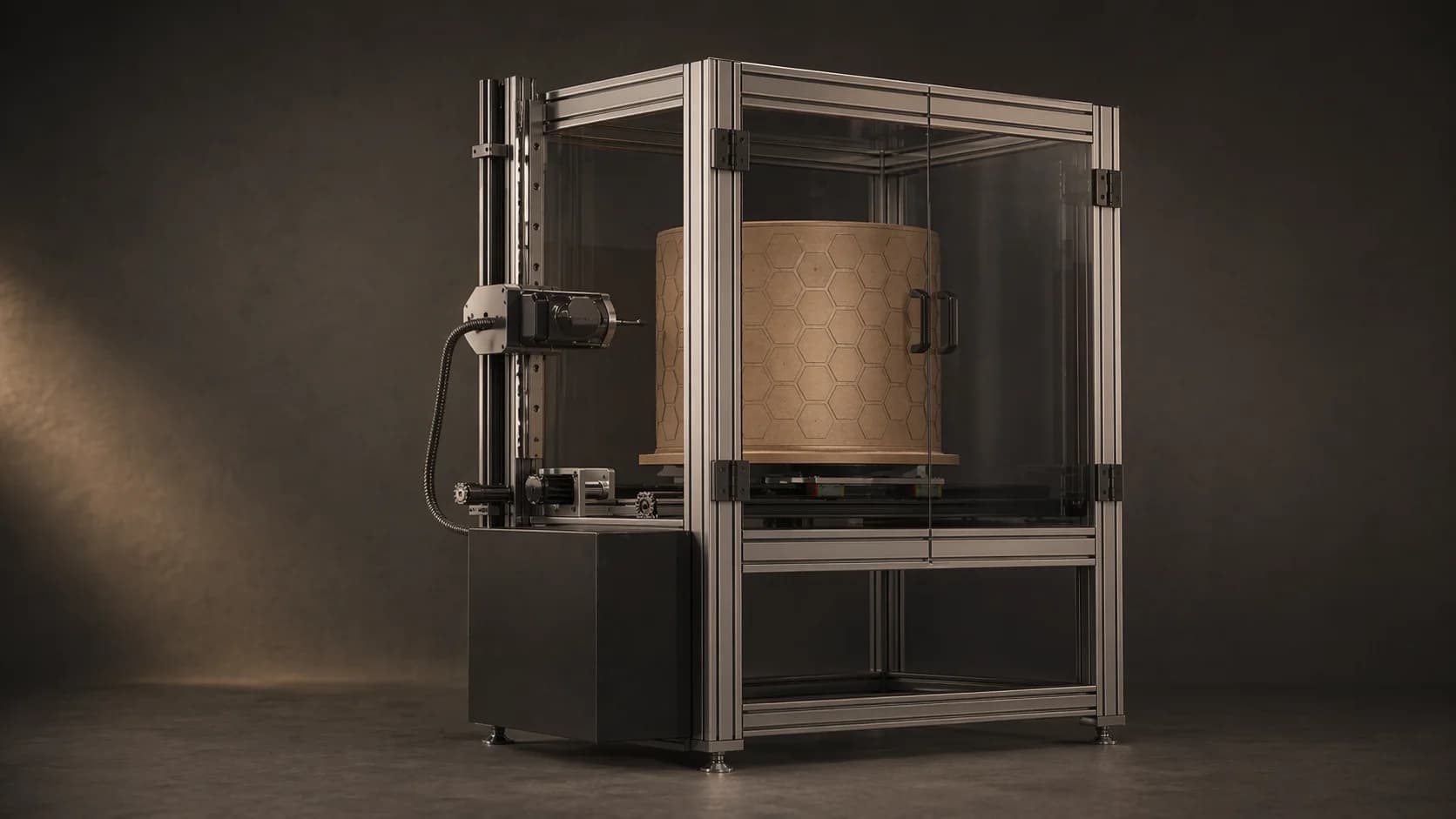
A stylized studio rendering of DrumBot with a spindle, cable run, control box, and patterned drum shell inside an aluminum frame.

Details

Published
April 8, 2026
Format
Technical essay
Read time
8 min read
Focus
Additive manufacturing, CNC, and control

Overview

The work stays close to the machines.

Printed lugs, gaskets, throwoffs, butt plates, shells, fixtures, revisions.

Short loops. Fewer translations.

Additive manufacturing is production.

The same path that makes a test part can make the part that ships.

Lugs, gaskets, throwoffs, butt plates. Finished hardware, not placeholders.

A change to geometry can stay inside the same loop.
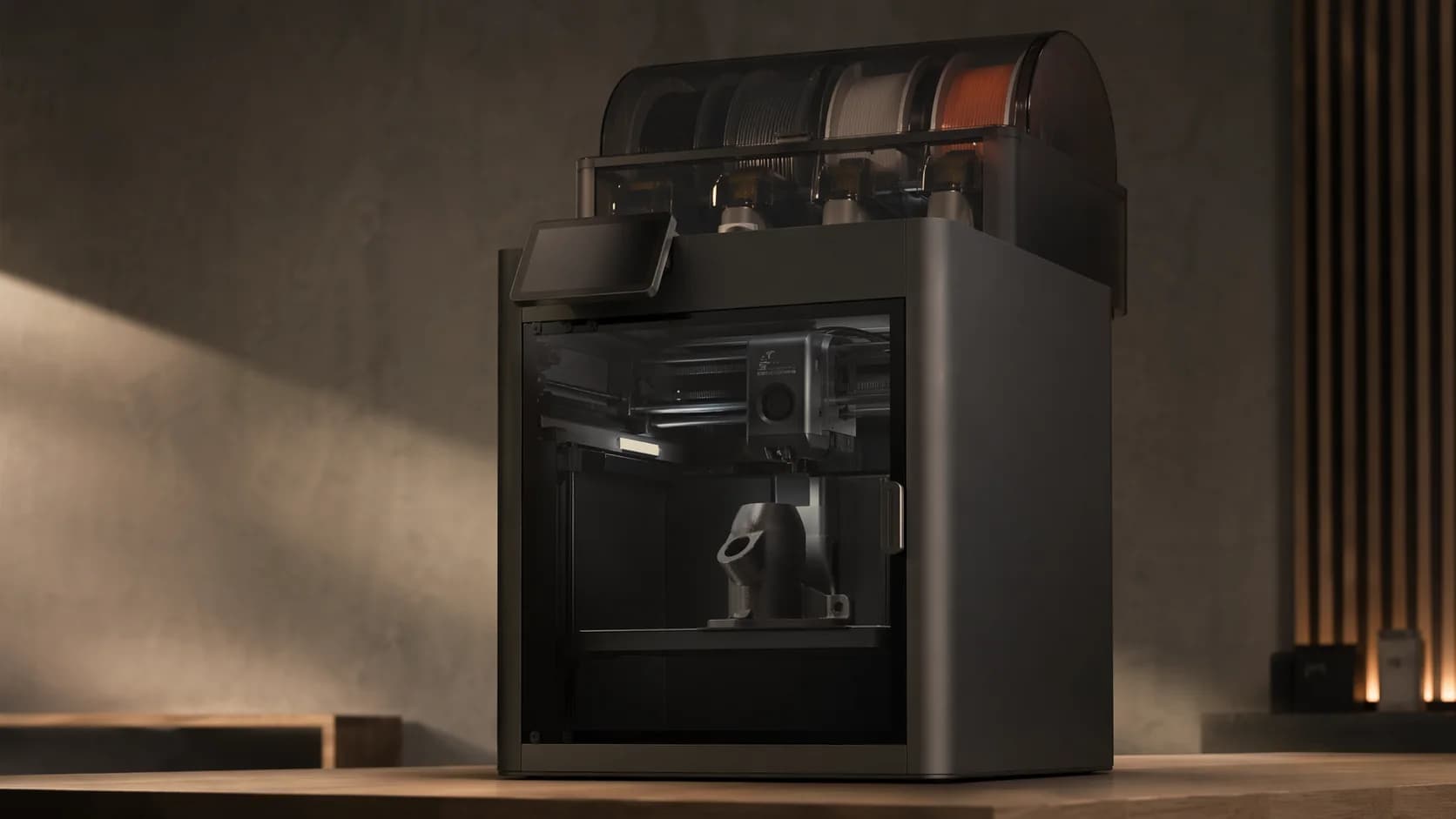
  • Finished parts, not just test pieces.
  • The same digital pipeline supports prototyping and production.
A modern enclosed 3D printer in a quiet studio, with a small functional part on the build plate.
The production path starts close to the machine.

Small studios can move quickly.

Distance slows ideas down.

Digital tooling keeps the drawing, the fixture, the prototype, and the finished part in conversation.
  • Shorter feedback loops between idea and object.
  • Less distance between drawing and machine.
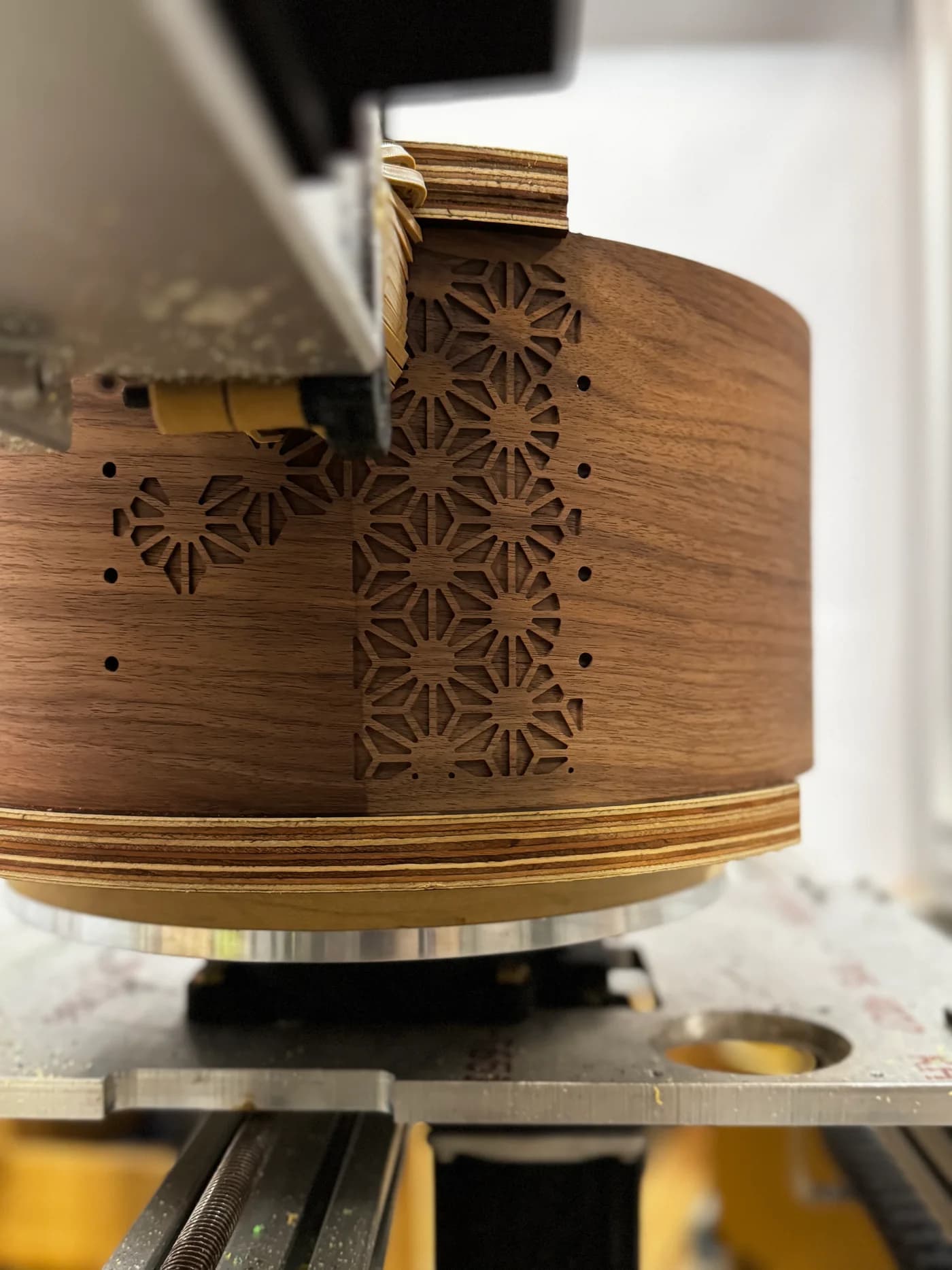
An Asanoha drum shell being machined on DrumBot, with the cutting head close to the patterned wood shell.
The drawing meets the shell.

Repeatability is part of the work.

Once a shape works, it has to work again.

CNC turns geometry into repeatable operations and keeps the drawing close to the part.
  • Repeatability is a design feature.
  • Tolerances stay close to the drawing.
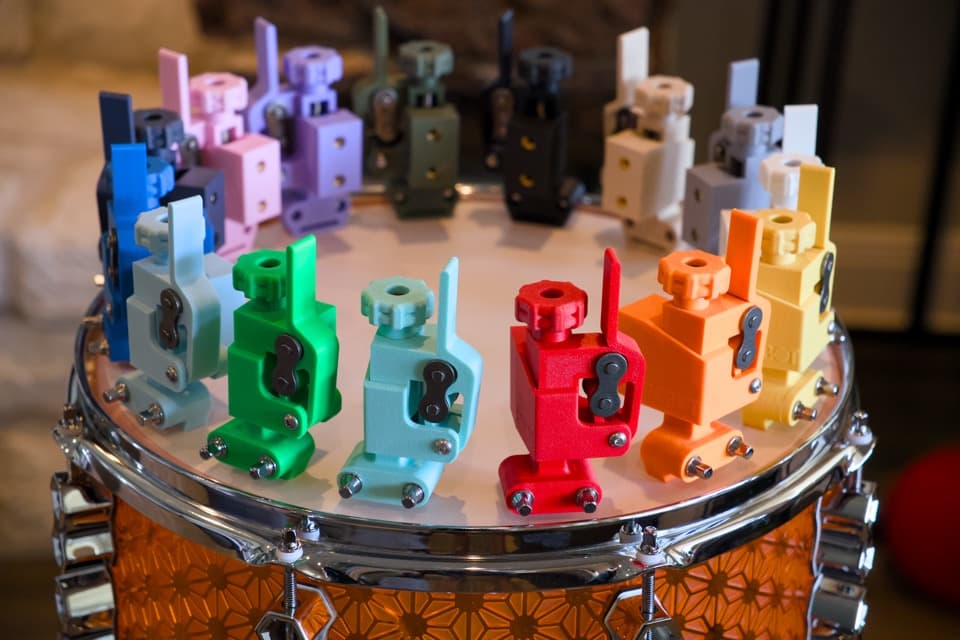
Colorful Robot hardware parts arranged on a drum shell.
Printed parts, from test fit to finished hardware.

Affordability comes from control, not shortcuts.

Small runs need low waste, short setup, and quick revision.

Control is what keeps the work possible.

  • Lower setup cost than traditional one-off workflows.
  • Small production runs stay viable.
  • Design changes can be absorbed quickly.

Reliability is manufactured.

A part has to survive the box, the room, the hardware, the player.

Geometry, fit, material, finish. All of it counts.
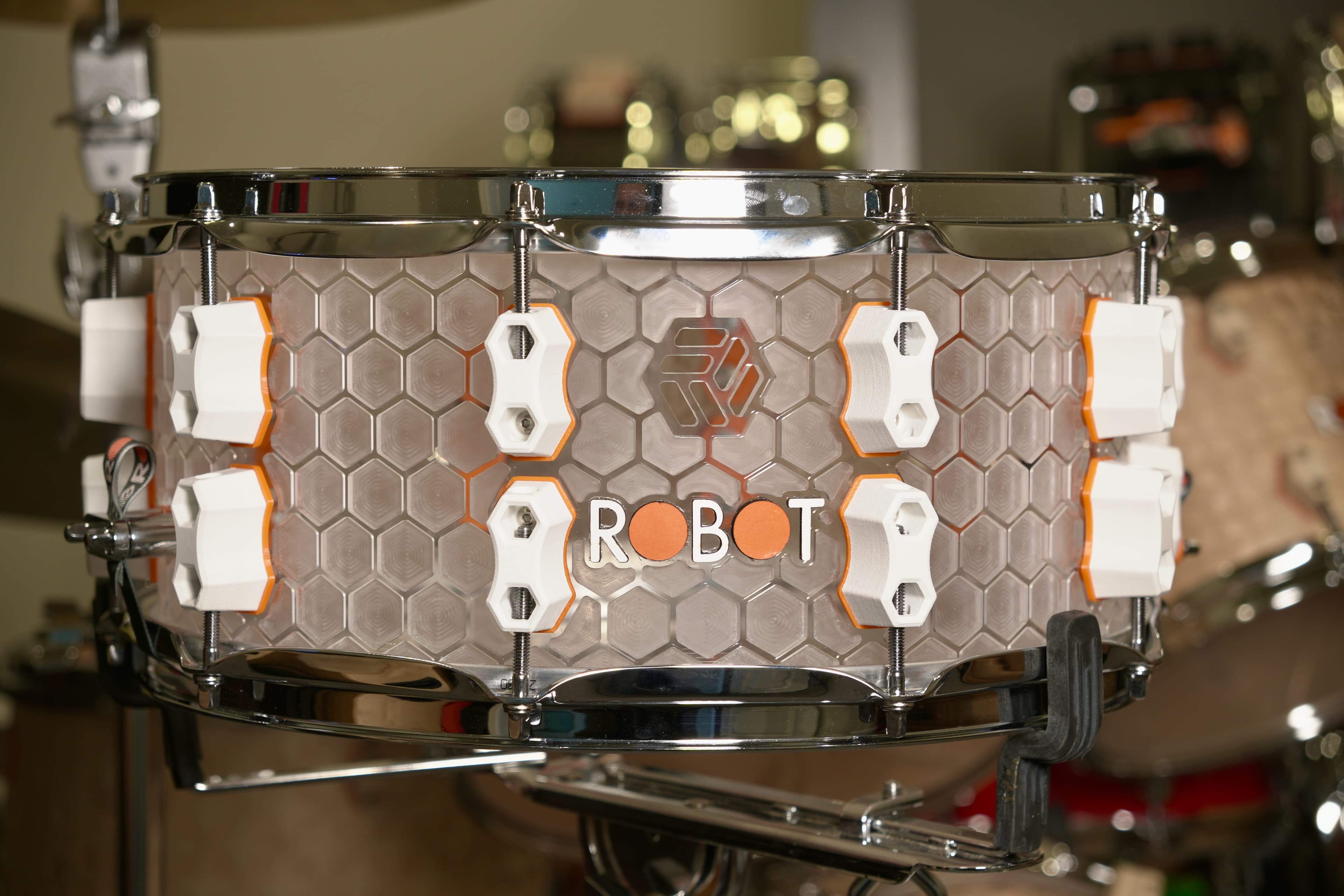
Close view of a clear Robot drum shell with printed white and orange hardware.
The finished system has to work in the world.

Why build in America.

The feedback loop stays short.

Make it. Check it. Change it. Learn what the drawing did not say.

  • Shorter feedback loops.
  • Closer control over quality.
  • More direct accountability to the design.

The machine stays close.

Some knowledge belongs in the studio.

Not everything should be translated out of the room.

Related object

More from Studio