
Interactive essayOctober 23, 2026
Hardware Is Part of the Shell
Lugs and throwoffs add mass where the shell moves. Here is what that does.
Read
Essay
Asanoha, Kumiko, Shippo and Hive: where each geometry comes from, and what it does on a shell.
Details
Overview
None of these patterns is drawn freehand.
Each one is a short rule, repeated until it fills the surface.
That is why they travel from cloth to crest to drum shell, and why they suit a machine.
Fig. 6
Because each pattern is a rule rather than a picture, it scales without losing itself. A kimono, a lantern screen and a 14-inch shell can carry the same geometry.
A rule also turns straight into a toolpath. The drawing the machine follows is the pattern.
The rule
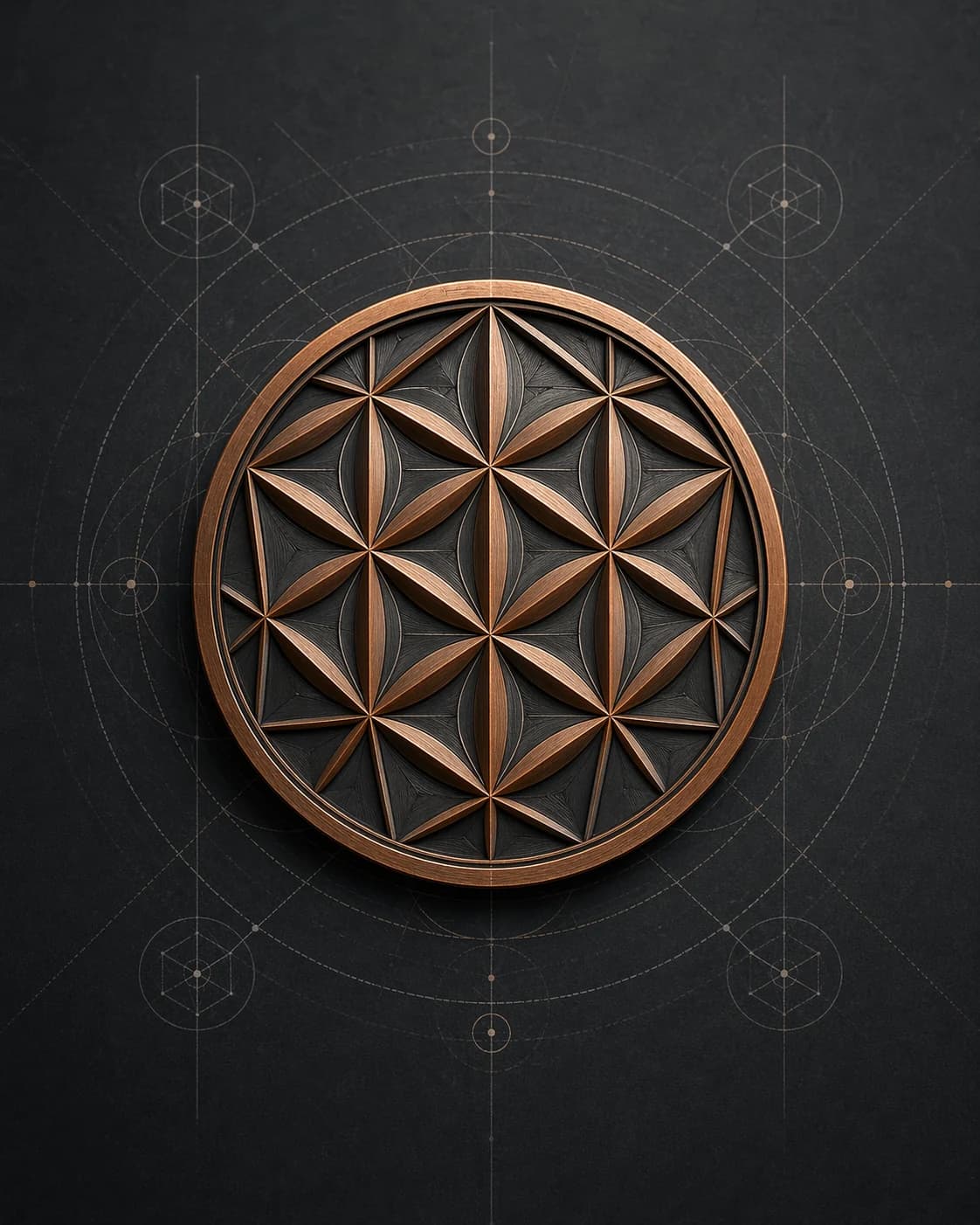
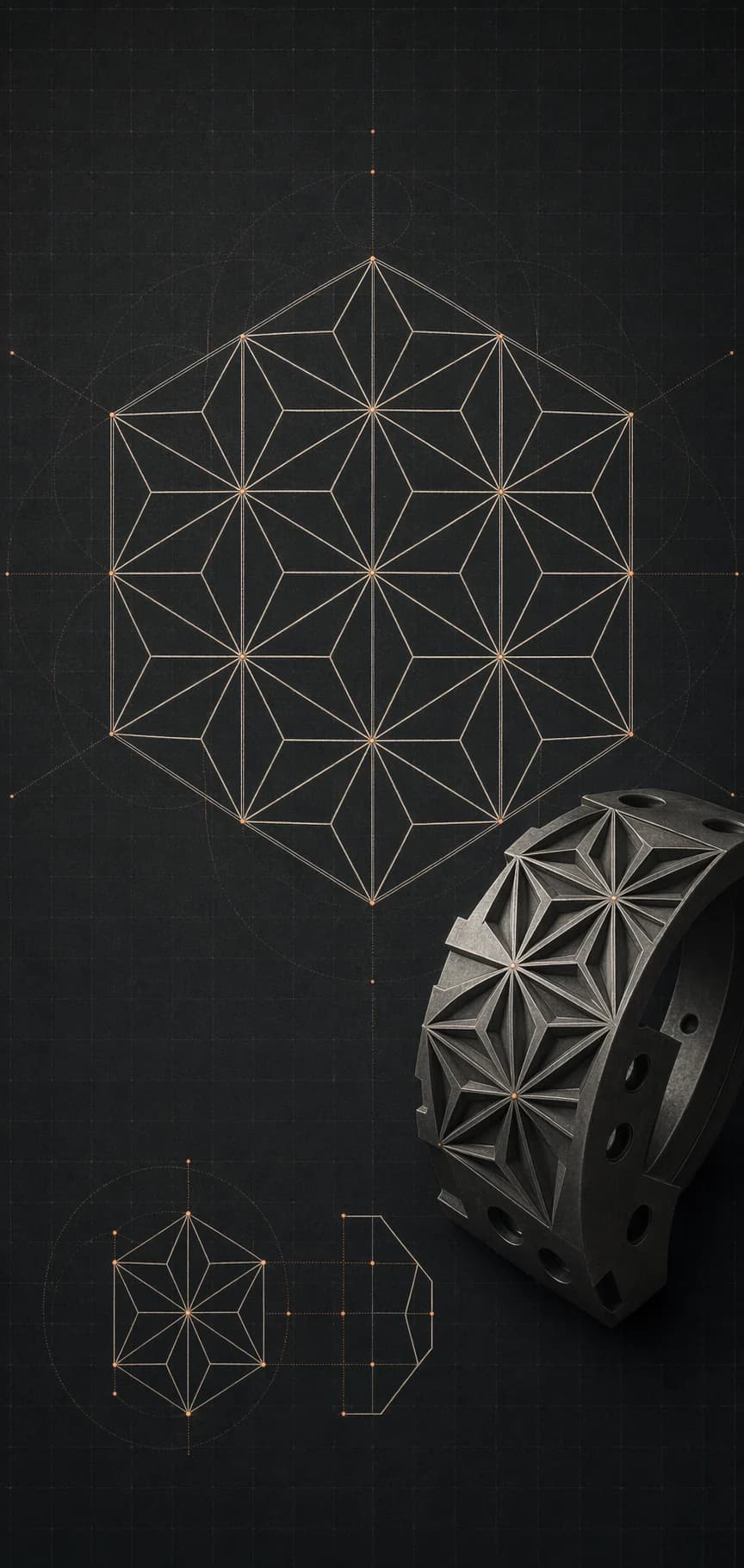
Draw a grid of equilateral triangles. Join each triangle's three corners to its center. Six-pointed leaves appear that nobody drew.
Hemp grows fast and straight, so the pattern carried a wish for children: grow strong, stay protected.
See the Asanoha SeriesEquilateral triangles, each joined corner to center. Six-pointed leaves appear across the whole field.
Hemp grows fast and straight, so the motif carried a wish for children: grow strong, stay protected. It moved from clothing into crests, interiors and public surfaces.
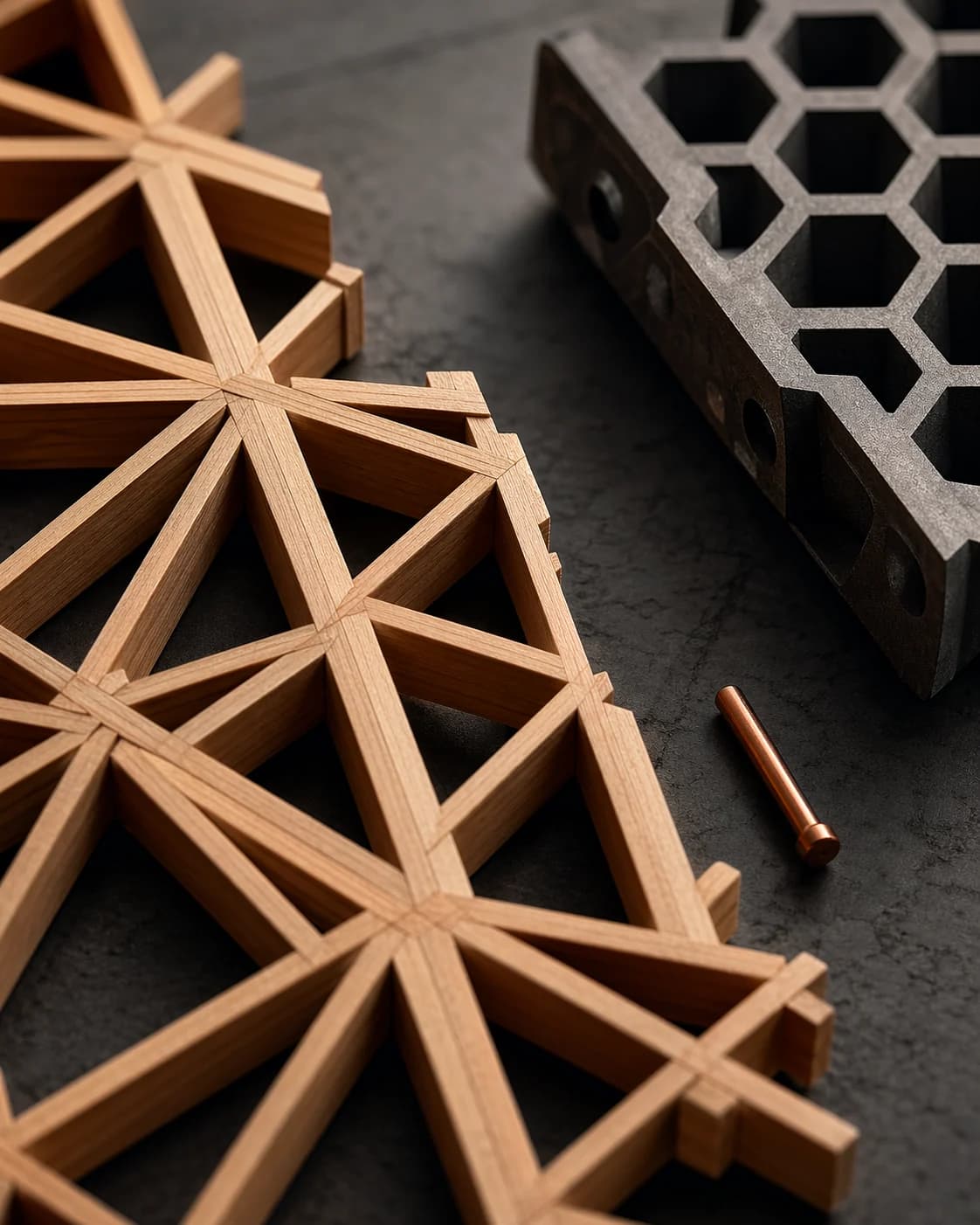
Kumiko joiners build screens from thin strips of wood, cut and fitted so precisely that the lattice holds itself together. The pattern is the structure.
The Kumiko Series carries that idea into the shell as an isogrid. The geometry carries load and sets how the shell responds.
Circles of one size, overlapping in a chain with no end. The name means seven treasures, and the pattern stands for harmony and good relations.
The Shippo Series uses Kaku Shippo, a squared variant of the same idea.
Hexagons split a surface into equal cells with less total wall than any other shape. Bees use it to save wax.
On a machined shell it means the most mass removed for the rib left behind. The Hive Series uses it to take weight out of the shell.